Get Paid to Clip: How Clip Campaigns Really Pay Out

You get paid to clip when a brand funds a campaign, you cut the clips it asked for, and the brand approves your work. The payment is a reward for approved work.
On this page24
You get paid to clip when a brand funds a campaign, you cut the clips it asked for, and the brand approves your work. The payment is not a tip and it is not a share of ad revenue. It is a reward for approved work, and the budget is reserved before you start cutting.
That is the honest version. Most pages about getting paid to clip skip the part that matters, which is how the money actually reaches you. This guide covers the whole path, from the brief to the withdrawal.
The difference between getting paid to clip and clipping for views
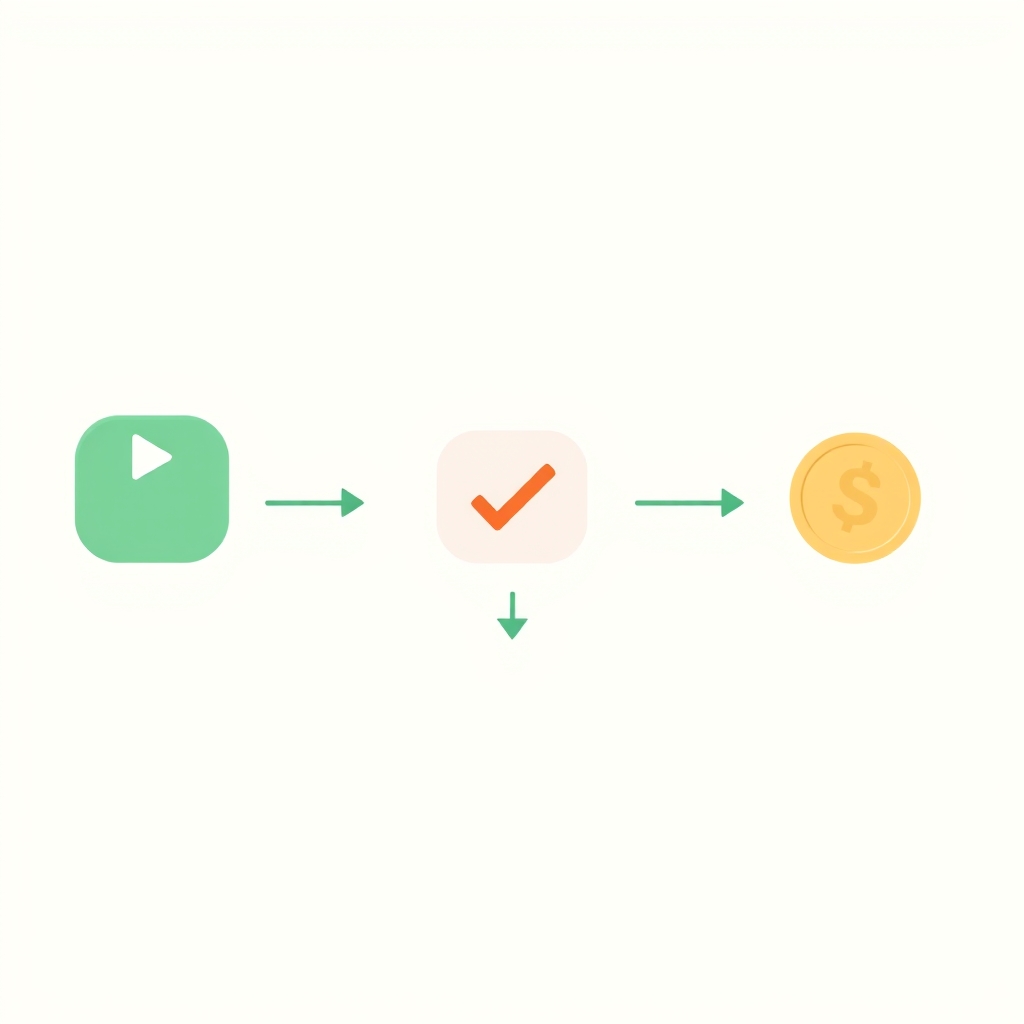
There are two very different things people mean when they say they get paid to clip.
The first is platform revenue. You post clips on your own account, the platform runs ads, and you earn a share if you qualify. This is slow, it depends on thresholds you may never reach, and it is not a job. It is a lottery with a long queue.
The second is paid campaign work. A brand has a video it wants clipped, it funds a campaign, and it pays creators for approved clips. This is a job. The reward is stated before you apply, and the budget exists before you start.
Both are real. Only the second one lets you plan. If you want to know what you will earn before you do the work, you want campaign work. That is the only reliable way to get paid to clip.
How the payment actually works
On Allgig, the order is fixed, and the order is what protects you.
- The brand writes a brief and states the reward.
- The brand funds the campaign, so the budget is reserved before it goes live.
- You apply, usually with a sample or a short pitch.
- The brand selects the creators it wants.
- You cut the clips and submit them for review.
- The brand approves, or asks for a change.
- Approval releases payment to your wallet.
- You withdraw when you are ready.
Two steps in that list matter more than the rest. Step two means the money is committed before you work. Step seven means payment follows approval, not submission. You are not paid for uploading. You are paid for work the brand accepts.
Why funded-first matters when you get paid to clip
Most complaints about clip work come down to one thing: the creator did the work and the payment never arrived. The usual cause is that the brand was never committed to paying. There was no budget, only an intention.
A funded campaign removes that risk at the source. The money is reserved before the campaign goes live, so the question is never whether the brand can pay. It is only whether the work gets approved.
That does not mean every submission is approved. It means the money is real and waiting. If your clip is approved, payment follows. If it is not, you know why, and you can fix it or move to the next campaign.
What you are actually paid for when you get paid to clip
You are paid for approved work, and approval is about the brief.
A brand is not paying for effort. It is paying for a clip it can use. That means the clip has to match the length, the platform, the topic, and the quality the brief asked for. A beautifully edited clip that ignores the brief will not be approved, and a plain clip that follows it will. If you want to get paid to clip consistently, this is the single most important thing to understand.
This is good news, because it means the job is learnable. Read the brief, match the brief, and your approval rate goes up.
Withdrawals are a separate step from getting paid to clip
Approval and withdrawal are two different things, and mixing them up causes most of the confusion about clip pay.
Approval releases payment to your wallet. Withdrawal is you taking that money out. A first withdrawal is reviewed by hand, and larger withdrawals go through the same check. That is slower than an instant transfer, and it is the honest trade for knowing the money is real when you get paid to clip.
So the sequence is: work, approval, wallet, withdrawal. Four steps, in that order, every time.
The kit you actually need
Less than most people think.
You need a phone or a laptop that can run a basic editor. You need the source video, which the campaign provides. You need an eye for the moment that makes someone stop scrolling. And you need to read the brief properly.
You do not need a camera, because the footage exists. You do not need a following, because the clip is judged on its own. And you do not need to show your face, because plenty of clipping work is faceless by design.
How to spot a job that will not pay
The test is simple, and it works everywhere.
A real job states the reward before you start and reserves the budget before the campaign goes live. If you can see the number and the brief, you are looking at a job.
An empty job asks you to work first and discuss payment later. It has no brief, no stated reward, and no approval step. If you cannot see the reward before you start, you are not looking at a job. You are looking at a favour.
How to build a clipping habit that gets you paid
Getting paid to clip rewards consistency more than talent. A creator who submits clean clips every week gets invited back. A creator who submits one brilliant clip and disappears does not.
Start by clipping for yourself. Take a long video you already like, cut three clips from it, and watch them back on mute. If they still hold your attention, you are ready to apply. If they do not, you have found the exact skill to practise.
Keep a small folder of your best clips. When a brief asks for a sample, you already have one. You do not need paid work to show what you can do. You need three clips that prove you can find the moment and cut it clean.
Read every brief you can find, even the ones you do not apply to. The briefs teach you what brands want, and the patterns repeat. After ten briefs you will know the shape of a good submission before you open an editor.
What you can honestly expect to earn
You will not find an income figure here, and that is deliberate. Anyone who tells you what you will earn before knowing the campaigns you apply to is guessing.
What you can know is the reward before you commit, because the brief states it. A campaign that asks for three clips at a stated reward tells you exactly what approval is worth. Add up the campaigns you complete and you have your real number, not an invented one.
The variable is not the platform. It is how many campaigns you apply to, how many approve you, and how quickly you get good at following a brief. Those are the three things you control, and they matter far more than any headline figure someone else quotes.
That is the honest version. If a page promises you a monthly income for clipping, close the tab. If it shows you a stated reward per campaign, read on.
Why some creators never get paid to clip
It is rarely talent. Most creators who never get paid make the same three mistakes.
They apply once and stop. One rejection is not a verdict, and the creators who succeed apply to campaign after campaign until one approves them.
They ignore the brief. A clip that ignores the length, the platform, or the topic will not be approved, however well it is edited. The brief is the job description, not a suggestion.
They look for work in the wrong place. A group chat that promises clip work with no stated reward is not a marketplace. It is a conversation. The reward is stated on the campaign, or it does not exist.
Fix those three and the picture changes, because you are now doing the things that the paid creators do.
Reading a brief properly
The brief is where getting paid to clip is decided, so it deserves more than a glance.
Read it once for the reward. Read it again for the deliverable: how many clips, how long, which platform, what topic. Then read it a third time for the deadline, because a late submission is a rejected submission.
If something is unclear, ask before you cut. A question costs a minute. A rejected submission costs the whole job.
Keep the brief open while you work. Most rejected clips fail because the creator remembered the brief roughly instead of exactly, and the difference between roughly and exactly is the difference between approved and not.
What happens after your first approval
The first approval changes how you approach the work, because you now know the mechanism is real. It is the moment you stop hoping to get paid to clip and start knowing how it happens.
Payment lands in your wallet. Withdrawal is a separate step, and a first withdrawal is reviewed by hand. Once that clears, the whole process stops being abstract.
From there the path is repetition. Apply, submit, get approved, get paid. Each round makes the next one easier, because your record grows and brands begin to recognise your name.
That is the whole arc. It is slower than the promises, and far more real than them.
What the first month really looks like
Nobody starts with a full calendar of paid clip work, and anyone who promises that is selling something.
The honest pattern is this. You apply to several campaigns. Some do not reply, because the brand picked someone else. One or two invite you to submit. You cut the clips, you submit them, and you learn from the feedback. The second submission is better than the first, because you now know what the brand actually wanted.
That is the whole loop. Apply, submit, learn, repeat. The creators who stick with it are the ones who treat the first rejection as information rather than a verdict.
How much time a paid clipping job takes
This is the question people ask before they apply, and the honest answer depends on the source.
Watching the source takes the longest. A one-hour podcast needs an hour to review properly, because the moments worth clipping are rarely in the first five minutes. The cutting is faster once you know which moment you want.
A set of three clips usually takes two to four hours in total, spread across a day or two. That includes the review, the cuts, the captions, and the export. It is a real amount of work, and it is the reason the reward is fixed per job rather than paid by the hour.
The time drops as you build a workflow. Your export settings become automatic, your caption template is ready, and your eye finds the moment faster. That is how getting paid to clip becomes easier with repetition rather than harder.
What separates creators who get paid from those who do not
The difference between creators who get paid to clip and those who do not is rarely talent. It is a few habits.
They apply consistently rather than waiting for a perfect opportunity. They read the brief properly and match it exactly. They submit on time, because a late submission is a rejected submission. And they answer feedback with a fixed clip rather than an argument.
None of those require special skill. All of them decide whether the work is approved, and approval is what releases payment.
One thing that does not decide your pay
It is worth saying plainly, because it causes a lot of unnecessary worry.
Your follower count does not decide whether you get paid to clip. Approval is about the clip you submit, not your audience. A brand wants a clip that performs, and that is a craft question rather than a popularity one.
So do not wait to grow an audience before you apply. The audience was never part of the deal, and treating it as a prerequisite is how creators delay their first paid campaign by months.
What does decide it is the clip. Can it hold attention for fifteen seconds? Is the product clear? Did it follow the brief? Those three questions are the whole assessment, and every one of them is something you can practise today with a phone and a product you already own.
Frequently asked questions
How do I get paid to clip?
You apply to a funded campaign, cut the clips the brief asks for, submit them for review, and get paid when the brand approves them. The budget is reserved before the campaign goes live.
Do I get paid per clip or per campaign?
The brief states the reward, and it is usually tied to the set of clips the campaign asks for. Read the brief before you apply, because the number is always stated upfront.
Do I need followers to get paid to clip?
No. Clipping work is judged on the clip you submit, not on your audience size. A brand wants a clip that performs, and that is a craft question.
How long until I get paid?
Payment follows approval, not submission. Once the brand approves your work, payment is released to your wallet, and you withdraw when you are ready. A first withdrawal is reviewed by hand.
Can I clip any video I want and get paid?
No. You clip the source material a campaign provides, and you follow the brief. Clipping a video you do not have the right to use is a copyright problem, not a shortcut.
What if my clip is not approved?
You get the reason, and you can fix it or move on. The campaign budget stays reserved for approved work, so an unapproved clip does not cost you money you were never owed.
The shortest path to getting paid to clip
If you take one thing from this guide, take this. The brief is where the money is decided.
It states the reward, the number of clips, the length, the platform, and the deadline. Everything you need to know about whether the work is worth your time is on that page. Read it before you apply, and read it again before you cut.
When you are ready, the clipping work on Allgig shows funded campaigns with the reward stated upfront. If you want the day-to-day side of the work, how clipping jobs work covers it. And if the payment terms are still unclear, the Allgig learning library explains them without jargon.
One honest note before you go. Getting paid to clip is not a shortcut to easy money, and anyone who tells you otherwise is not being straight with you. It is a craft. The reward is real, the work is real, and the better you get at finding the moment, the more campaigns will want you.