How Allgig Campaign Funding Works Before Anyone Applies

You have been promised money for content before. Some of it arrived. Some of it turned into a conversation that went quiet around the third week, and you were left holding a finished clip and a polite excuse.
On this page13
You have been promised money for content before. Some of it arrived. Some of it turned into a conversation that went quiet around the third week, and you were left holding a finished clip and a polite excuse.
That is the reason this page exists. You have no reason to believe a platform's reassurances, so this page shows you how campaign funding works instead, and lets you check it yourself before you spend an afternoon filming anything.
The part that happens before you see anything
A campaign is not visible to creators the moment a brand writes it. There is a step in between, and that step is the whole mechanism.
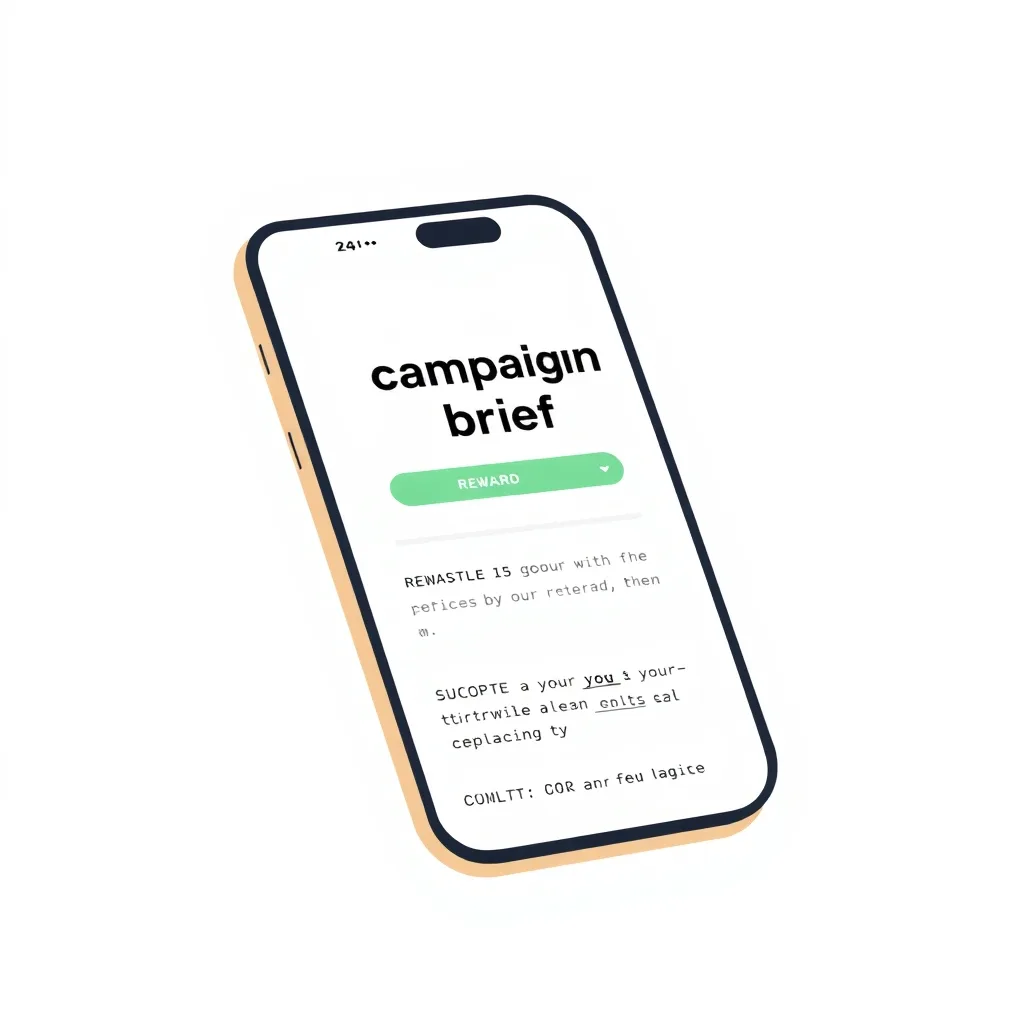
The brand writes the brief and sets the reward. Then it funds the campaign. The money leaves the brand's account and becomes a reserved budget tied to that specific campaign, and only once that has happened does the campaign appear for creators to apply to.
Which means every campaign you can see has already been paid for. Not promised. Paid, held, and waiting for somebody to earn it.
You cannot verify that from a screenshot, and you should not take a platform's word for it. What you can do is watch for the one detail that separates a funded campaign from a draft: whether creators are applying to it at all. A campaign that is collecting applications has passed the funding step, because that step is a precondition rather than a formality.
Where the money sits while you work
Between funding and approval, the reward sits somewhere specific rather than waiting in the brand's account for an invoice.
It is reserved. Allocated to that campaign and unavailable for the brand to spend on something else, which is why a brand running three campaigns in a month has committed three separate budgets rather than one pool it can dip into.
This matters more than it sounds, and here is the practical version. If a brand runs out of enthusiasm halfway through a campaign, the money does not run out with it. The budget was committed when the campaign went live, and it stays committed until work is approved against it.
What the reservation does not do is guarantee that your specific submission gets approved. Approval is a separate decision made against the brief. The reservation guarantees something narrower and more useful: that the money for approved work exists before you start, rather than depending on a brand's cash flow three weeks later.
What happens between submission and payment
You film. You submit. The brand reviews the work against the brief it wrote.
If the work meets the brief, the brand approves it, and approval releases the reward from the reserved budget into your wallet. If it does not meet the brief, you get the reason and a chance to fix it, and the budget stays reserved while you do.
Payment follows approval rather than submission, and that order is worth sitting with for a moment. Uploading earns nothing on its own. What releases the money is a brand accepting the work, which is the same standard a client would apply if you were freelancing for them directly.
The difference is that with a direct client, a rejection can mean you never get paid at all and have no recourse. Here, the budget is already committed, so a rejection costs you the job rather than the money you were owed for work you completed.
Reserved money is a different thing from promised money. One is a fact about an account. The other is a sentence in a message.
How to check a campaign before you commit your afternoon
Five things, and none of them require trusting anybody.
Is the reward stated on the brief? Not in a message afterwards, on the brief itself, before you apply. A number that arrives later is a negotiation. A number that is already written down is a term.
Is the deliverable defined? How many clips or videos, how long, which platform, what must be shown. A brief that cannot answer this is not ready to pay, and it usually means the brand has not thought the campaign through.
Is there an approval step described? You should know what counts as done. If the standard is vague, so is the finish line, and a vague finish line is where payment arguments start.
Are other creators applying? A live campaign with applications is a funded campaign. An empty one with no activity is worth a second look.
Are you being asked for money? No legitimate campaign charges you to apply. If there is a fee attached to seeing the brief, close the tab.
Five questions, about four minutes. If a campaign passes all five, you are looking at work whose reward already exists.
Can a brand cancel a campaign after I have started?
Campaigns can be paused or cancelled, and when that happens the reserved budget is released rather than paid out to nobody.

What protects you is the order of operations. You are not paid for starting, so a cancelled campaign does not leave you owed for work nobody received. The trade is real and it cuts both ways: you take on less risk than freelancing, and you also take on less certainty than a signed contract.
If a campaign you were working on gets cancelled, the practical answer is the same as with any client relationship. Note it, move to the next one, and keep the clips if the brief allowed you to.
What campaign funding does that a contract does not
A signed contract is a promise with a legal remedy attached. Campaign funding is a fact with nothing attached to it, and for this particular problem the fact is stronger.
With a contract, if a client does not pay you, the remedy runs through a small claims process, a lawyer, or a strongly worded message that may or may not work. The money you were owed stays owed, and getting it costs time you were not paid for. Most creators do not pursue small amounts at all, which is exactly why the problem persists across the industry.
Campaign funding skips the enforcement stage entirely, because there is nothing to enforce. The reward was committed before the campaign opened. The only decision left is whether your work meets the brief, and that decision is about your clip rather than about the brand's willingness or ability to pay.
There is a cost to that, and it is honest to name it. The arrangement is less flexible than a private client relationship. You cannot negotiate the reward upward after the fact, and you cannot agree a different deliverable halfway through because you had a better idea. The terms are the terms, which suits some creators and frustrates others.
What you get in exchange is that the uncertainty moves from the payment to the work. That is a better place for it, because the work is the part you control.
What campaign funding looks like from the brand's side
Creators tend to assume the funding step is protection aimed at them. It is aimed at both sides, and understanding the brand's half explains a few things that otherwise seem strange.
When a brand funds a campaign, that money leaves its working balance. It cannot be spent on packaging, or ads, or the thing the finance lead wanted to prioritise instead. For a small business running two campaigns a quarter, that is a real commitment made at the start rather than a bill arriving at the end.
Which is why brands write tighter briefs than creators expect. A brand that has already paid for a campaign has a strong interest in the brief being understood correctly the first time, because every revision costs it another week before it gets content it can use.
It also explains why so many campaigns ask for something specific rather than something open. A brand that has committed budget wants a predictable outcome, and a brief with a defined deliverable is the closest thing to a guarantee it can build.
So when you read a brief and think it sounds narrow, that narrowness is usually campaign funding doing its job. The brand is protecting a commitment it has already made, which reads as rigidity from the outside and looks like caution from the inside.
Why this model exists at all
Every platform in this space eventually faces the same problem. Creators stop trusting brands, because enough of them have been burned that the default assumption becomes suspicion.
The usual response is reassurance. A trust badge, a guarantee page, a promise that payment is secure. None of that is checkable, which is precisely why it stops working after the first bad experience.
Funding a campaign before it goes live is the structural version of that reassurance. It removes the failure mode rather than describing how unlikely it is. The brand cannot forget to pay, because the brand has already paid. It cannot change its mind about the budget, because the budget is not its to change.
That does not make every campaign a good campaign. It makes one specific failure impossible, and one specific failure is the one that has damaged this industry most.
What funding does not solve
It is worth being precise, because overclaiming here would undo the point of the page.
Funding does not guarantee you will be selected. Most applications are not, and that is normal at every level.
Funding does not guarantee your submission will be approved. Approval is about the brief, and a clip that misses the requirements will be sent back however well it was filmed.
Funding does not mean instant money after approval either. Approval releases the reward to your wallet, and withdrawal is a separate step. A first withdrawal is reviewed by hand, and larger withdrawals go through the same check. That is slower than an instant transfer, and it is the honest trade for a system where the money is verified at both ends.
What funding does is narrower and more valuable than any of that. It means the reward you were shown is the reward that exists, and the only question left is whether your work earns it.
Why some creators still get caught out
Campaign funding removes one failure mode. It does not remove every way a creator can lose an afternoon, and the remaining risks are worth naming.
The most common is applying to a campaign without reading it. Campaign funding guarantees the reward exists, and it says nothing about whether you can deliver what the brief describes. A creator who applies to a skincare brief with three homeware clips has wasted their own time, and the funding had nothing to do with it.
The second is treating a funded campaign as permission to skip the deadline. The budget being reserved does not make the campaign flexible. A late submission is still a rejected submission, and a brand that has already committed money has less patience for delays than one that has not.
The third is assuming that campaign funding means every campaign is worth taking. It does not. A real reward for an unreasonable scope is still an unreasonable job, and the fact that the money is genuine does not change the arithmetic.
Read it, meet the deadline, and check the scope against the reward. Campaign funding handles the part you cannot control. The rest stays with you, which is where it belongs.
Questions creators ask about campaign funding
Some of these come up often enough to answer directly.
Can I see the budget before I apply? You see the reward, which is the part that concerns you. The campaign's total budget is the brand's business, and a campaign with several creators spreads that total across all of them.
What if the brand disappears? The money is already committed, so a brand going quiet does not remove the budget. What it can do is stop reviewing submissions, which stalls the campaign rather than emptying it. If that happens, the practical move is to apply elsewhere rather than wait.
Why is the reward sometimes low? Because the brand set it, and campaign funding does not make a small reward into a large one. What it does is guarantee that a small reward is real. A low number you can collect beats a generous number that never arrives, though neither is worth your afternoon if the scope is unreasonable. How much UGC creators make covers what a reward that looks low is usually compensating for.
Does a funded campaign mean the brand is trustworthy? It means the brand has committed money, which is a meaningful signal and not a character reference. Read the brief carefully anyway, and treat the funding as one useful fact rather than a verdict.
What happens to the money if nobody applies? The campaign does not get paid out to nobody. It either stays open, gets extended, or gets cancelled and released. A brand with a funded campaign and no applications has an incentive to make that brief easier to say yes to.
One thing to do the next time you are asked to work first
Sooner or later a brand will message you directly and ask you to film something now with payment discussed afterwards. It happens constantly, and the message is usually friendly, which is what makes it easy to say yes to.
You do not need to be rude about it. Ask one question and wait for the answer: is the campaign funded, or is this a conversation about something that might happen later?
A brand with a funded campaign will have an answer immediately, because the funding step already happened and it is not a sensitive subject. A brand that goes vague, or offers to sort payment out at the end, has told you what you needed to know without meaning to.
That single question is the difference between working with campaign funding and working on a hope. Ask it every time, including the times you are excited about the brand, because excitement is precisely when people skip the question they should have asked.
The habit worth building
Before you apply to anything, anywhere, run the five checks. Reward stated. Deliverable defined. Approval step described. Other creators active. No fee to apply.
Do it on Allgig and do it on every other platform you use, because the checks are not platform-specific. They are just a description of what funded work looks like, and once you can recognise it you stop wasting afternoons on arrangements that were never going to pay.
That habit is worth more than any guarantee page, including this one. A guarantee asks you to believe something. A checklist lets you find out. When you are ready to test it, the funded campaigns on Allgig state the reward on the brief before you apply, which makes the first check take about four seconds. If you want to know what that approval is actually worth, how much UGC creators make sets out what the numbers depend on, and creator verification on Allgig explains the payout checks that sit between approval and money leaving. The Allgig learning library explains any term you meet along the way.